

People have started sending software to run their errands online. A person asks an agent to book a table, restock the groceries or buy what is in the cart, and the agent opens the websites, fills in the forms and, in most cases, asks before it pays. If people keep moving from the browser to the agent, it could be the biggest change in how the internet is used since the web browser itself, which in the 1990s turned the internet into something anyone could use. Agents could make it something anyone can use without looking at it. Much of the web pays for itself with ads shown to people reading pages. An agent reads the page for the person, so nobody sees the ads, and if the errands move to agents, that model could stop working altogether.
This page catalogs the personal AI agents that do this in November 2026: seventeen live agents in five kinds, and five announced agents, marked as announcements. Every field was checked against the company's pages on November 7, 2026, and a field that rests on a report or an older reading says so. Where a company publishes nothing, the entry says "Nothing published", which is the most common answer on this page.
HOW AI IS CHANGING THE INTERNET: THE GOOD, THE BAD, AND THE POINTLESS
Nobody asked us if we wanted the internet changed. So every week I send one email about one thing AI did to it, with the receipts, and what to do about it. Sometimes the honest answer is "not yet."
From someone who pays attention to this for a living.
Contents
- Personal AI Agents Take Over Errands People Did In A Browser, An App Or On The Phone
- When An Agent Does The Browsing, A Website Loses The Person It Was Built For
- Twenty-Two Personal AI Agents Listed By Kind, Status And What A Website Sees
- Meta's Muse, OpenAI's Dots, xAI's Grok Bot And Google's Gemini Task Work From A Computer In The Cloud
- Gemini In Chrome, Perplexity's Comet, Claude In Chrome And Opera Neon Act Inside The Person's Browser
- Instinct And Wajo's Fo Take Errands By Text Message And Phone
- Amazon, Walmart, DoorDash And Yelp Each Built An Agent That Shops Or Books Inside Their App
- Google AI Mode, Microsoft Copilot Checkout And Perplexity Instant Buy Put The Checkout Inside Search Or An Assistant
- Airbnb, Yelp, Anthropic, DoorDash And Amazon Have Announced Five Agents That Are Not Open To Everyone Yet
- Only Anthropic Publishes A Website Signal Tied To A Named Personal Agent, The Waitlisted Claude Duet
- Server Logs And Cloudflare Can Show The Few Personal Agents A Website Can Name
- Allowing Or Blocking Personal AI Agents Costs A Business Something Different For Each Kind
- Personal AI Agents From Meta, OpenAI, Amazon And Google Reach A Business As Its Customer, With No Name A Website Can Check
Personal AI Agents Take Over Errands People Did In A Browser, An App Or On The Phone
A personal AI agent runs an errand for one person: it buys, books, calls or fills in a form. Ask a chatbot for a train home and you get a timetable, ask an agent and you get a ticket. For a lot of errands, that means the agent does the job the person's web browser used to do. Muse runs in what Meta calls "an isolated linux box with a browser", a dot has "its own computer and browser", and Claude Duet browses in "its own browser in the cloud". Other agents take over the phone call or the app: Fo makes the call, Yelp's Check for Me will call a restaurant about the wait, and Amazon and DoorDash take orders by text.
The live agents split by where they do the work, and where they work decides what a business sees of them:
- Meta's Muse, OpenAI's dots, xAI's Grok Bot and Google's Gemini Task use a browser on a computer their maker runs, and visit websites from there.
- Google's Gemini in Chrome, the assistant in Perplexity's Comet browser, Anthropic's Claude in Chrome and Opera Neon click through websites inside the browser the person already uses, with the person's logins.
- Instinct, and Fo from a company called Wajo, take the errand by text message and handle it with calls, emails and websites.
- Amazon's Alexa for Shopping, Walmart's Sparky, Ask DoorDash and Yelp Assistant shop or book inside their company's app, and Amazon's Buy for Me goes out to buy from brands' websites.
- Google AI Mode, Microsoft's Copilot Checkout and Perplexity Instant Buy let the person buy inside Google, Copilot or Perplexity, with the store as the seller.
Five more are announced and not open to everyone: Airbnb's travel agent, Yelp Check for Me, Anthropic's Claude Duet, DoorDash ordering by text and Alexa ordering by text. OpenAI and xAI present dots and Grok Bot as work agents, and both are in the list because each one runs errands for one person. Three earlier agents are gone. OpenAI says "ChatGPT agent is no longer available" (OpenAI) and "Atlas has since been deprecated" (OpenAI), and Microsoft's support article for Copilot Web Actions now reads "The content of the article you were trying to reach is no longer available" (Microsoft), so none of the three has an entry.
A website can recognize a visitor by three things. The user agent is a line of text every request sends to say what software is asking, and anyone can type any user agent. A published list of IP addresses lets a website check that a request came from the company's computers. Signed requests, under a proposed standard called Web Bot Auth, carry a cryptographic signature a website can verify. robots.txt, the file where a website tells bots where they may go, works only on bots that choose to read it.
When An Agent Does The Browsing, A Website Loses The Person It Was Built For
If you have a website or sell online, personal agents change three things: how your customers arrive, what they see, and who decides what they buy.
The web was built for a person looking at a page. Product pages, reviews, ads and checkouts are made to be read, and analytics count the people reading them. When an agent reads a page for the person, the person does not see the ads on it, and can approve a purchase without ever seeing the store. Cloudflare already lets a website block personal agents only on pages that carry ads.
The agent also does the comparing, and it narrows the options before the person sees any of them. An agent can only compare what it can read, so the price, the stock and the returns policy have to be there in words it can read. Shopping is already the most common use of Muse, with an average purchase over $200, by Meta's count.
The agent runs errands for the person, but Meta, OpenAI, Google or Amazon built it, runs it and sets its rules, so it works on their terms. Alexa for Shopping, with the biggest figure any agent built for shopping publishes, works inside the store that built it.
It is early. Of the agents that browse the open web for a person, only Meta publishes a count of the people using the agent itself, since Perplexity's figure counts the Comet browser.
Twenty-Two Personal AI Agents Listed By Kind, Status And What A Website Sees
| Agent (maker) | Kind | Status, November 7, 2026 | What a website sees | Usage the company publishes |
|---|---|---|---|---|
| Muse (Meta) | Cloud computer | Live: US, Canada, Japan, Singapore | Nothing published | 10M+ set up in a month and a half, ~25% use it daily |
| dots (OpenAI) | Cloud computer | Live: Pro, Business Premium, Enterprise | Nothing published | None published |
| Grok Bot (xAI) | Cloud computer | Live: X Subscription plans | Nothing published | None published |
| Gemini Task (Google) | Cloud computer or the person's Chrome | Live: AI Pro and Ultra, 18+ | Nothing tied to Task | None published |
| Gemini in Chrome auto browse (Google) | Person's browser | Live: US, India, desktop and Android | Nothing published | None published |
| Comet assistant (Perplexity) | Person's browser | Live: desktop, Android, iOS | Nothing published | "Millions" use Comet daily |
| Claude in Chrome (Anthropic) | Person's browser | Live: paid Claude plans, desktop Chrome | Nothing published | None published |
| Opera Neon (Opera) | Person's browser | Live: $19.90 a month, Windows and macOS | Nothing published | None published |
| Instinct | Text or phone | Live, invite only (TechCrunch) | Nothing published | None published |
| Fo (Wajo) | Text or phone | Live: free tier | Nothing published | None published |
| Alexa for Shopping and Buy for Me (Amazon) | Store's agent | Live: US, Buy for Me in beta | Nothing published | 400M+ customers in 12 months |
| Sparky (Walmart) | Store's agent | Live: US | Not applicable | Users up 70% a year, and they spend 40% more per order than non-users |
| Ask DoorDash | Store's agent | Live: select areas, iOS | Not applicable | 30%+ of its grocery orders are restocks |
| Yelp Assistant booking | Store's agent | Live: iOS and Android | Not applicable | ~10% of Request-a-Quote projects |
| Google AI Mode, Ask Maps, Universal Cart | Checkout in search | Live: US, with booking in at least five countries | Google-Agent, not tied to these | 1B+ monthly AI Mode users |
| Copilot Checkout (Microsoft) | Checkout in an assistant | Live: US | Nothing published | None published |
| Perplexity Instant Buy | Checkout in an assistant | Live: US | Nothing published | None published |
| Airbnb's travel agent | Announced | Announced November 5, 2026, rollout in the first half of 2027 | Not applicable | None, not launched |
| Check for Me (Yelp) | Announced | Announced October 20, 2026, "coming months" | Not applicable (a phone call) | None, not launched |
| Claude Duet (Anthropic) | Announced | Announced October 21, 2026, waitlist, US | Claude-Agent token, nine IPs | None published |
| DoorDash ordering by text | Announced | Announced September 30, 2026, waitlist beta, US iOS | Not applicable | None published |
| Alexa ordering by text (Amazon) | Announced | Announced November 6, 2026, invite only, US | Not applicable | None for texting |
"Nothing published" means the maker has no page telling a website how to recognize the agent. The usage figures count different things (people who set up Muse, customers who used Alexa for Shopping in a year, growth in Sparky users), so they do not compare.
Meta's Muse, OpenAI's Dots, xAI's Grok Bot And Google's Gemini Task Work From A Computer In The Cloud
None of the four makers publishes a way for a website to recognize its agent by name.
Muse (Meta)
- What it does: A personal agent that can "open a browser, fill out forms, and negotiate" for the person, send email, book travel and shop, and it checks with the person before sending an email or making a purchase.
- Status: Live in the US since September 8, 2026, on iOS, Android, muse.ai and inside WhatsApp, in Canada since September 2026, in Japan since October 23, 2026, and in Singapore since October 27, 2026. Meta calls it "free for most of what people need", with paid plans whose prices its pages do not give.
- Run by: Meta, on computers it runs, acting in the person's name. Meta: "When Muse browses the internet, it will appear as your activity."
- How it pays: Stripe's Link, Stripe's stored-payment service, issues a single-use card number that "is tied to that particular merchant", and Meta presents "a human in the loop approval" for every purchase. Shop Pay is "coming soon".
- What a website sees: Meta publishes nothing that names Muse. Meta's crawler page lists five agents and never mentions Muse. No Meta page lists IP addresses or signing for Muse.
- Usage the company publishes: "more than 10 million people in the US and Canada have set up Muse personal agents" in a month and a half, and "About 25% of people who have set up Muse use it on any given day" (Zuckerberg, Q3 2026 earnings call, October 21, 2026). Shopping is the most common use, "with an average purchase size over $200".
- Sources: Meta's Muse announcement, September 8, 2026, Meta's Muse Japan announcement, October 23, 2026, Meta's Muse Singapore announcement, October 27, 2026, Muse's security post, Meta Q3 2026 earnings call transcript, October 21, 2026, Meta's crawler page
PPC Land reported on October 31, 2026 that Jérôme Segura of DataDome, a bot-management company, sees "a relatively small number of requests" from Meta signed with Web Bot Auth since around October 12, Muse among them, and that Meta has not announced the change or said where it publishes its keys. Zuckerberg also said that "in the first week we had to work with Stripe to raise credit limits".
dots (OpenAI)
- What it does: Always-on agents inside ChatGPT: "Your dot lives in the cloud and has its own computer and browser." A dot uses the person's connected apps, signs in to websites with saved passwords "without exposing them to the model", and leaves sensitive tasks such as changing a password to the person.
- Status: Live since September 29, 2026, "rolling out gradually to eligible Pro and Business Premium accounts", with Pro unavailable in the European Economic Area, the UK and Switzerland. In Enterprise, Edu and Healthcare workspaces, access is on by default from November 18, 2026 unless a workspace opts out.
- Run by: OpenAI, on a cloud computer it runs or on the person's connected computer, for the person or for a workspace on business plans.
- How it pays: OpenAI's safety post (September 29, 2026): "Dots can make purchases using cards you've already saved on a merchant's website. Those purchases require your approval."
- What a website sees: Nothing published. OpenAI's bots page lists OAI-SearchBot, OAI-AdsBot, GPTBot and ChatGPT-User and never mentions dots. The dots docs: "If a website blocks the cloud browser, ask your dot to try your connected computer."
- Usage the company publishes: None published.
- Sources: OpenAI's dots announcement, September 29, 2026, OpenAI's dots safety post, September 29, 2026, OpenAI's dots docs, OpenAI's dots docs on computers and apps, OpenAI's bots page
Grok Bot (xAI)
- What it does: Agents on "a real computer in the cloud" with "a browser, command line, and filesystem". xAI's page calls them "AI teammates you can give real work to". It signs in to websites with logins saved in its Vault or a connected password manager.
- Status: Live. Included with Premium ($30 a month), Super ($100) and Ultra ($200) on The X Subscription, and "generally available for Enterprise". xAI gives no country list.
- Run by: xAI, on a cloud computer it runs, for the person or for a team on business seats.
- How it pays: "a card saved in Vault, a card you enter in a Secure Form, or a connected wallet such as Link or X Money". A card saved in Vault "fills in at checkout without a separate approval each time".
- What a website sees: Nothing published. xAI's docs give no user agent, IP list or signing. The FAQ: "Some sites block traffic from cloud computers", and the fix it offers is "Route traffic through this computer", the person's machine.
- Usage the company publishes: None published.
- Sources: xAI's Grok Bot page, Grok Bot docs overview, Grok Bot FAQ, Grok Bot docs on the computer and apps, Grok Bot docs on approvals, security and privacy
Grok Bot is the only agent here whose docs say a saved card pays without asking each time. Elon Musk said on X that Grok Bot's usage limits were cut because "The cost of serving Grok Bot was unsustainably high relative to revenue" (TechCrunch, November 2, 2026).
Gemini Task (Google)
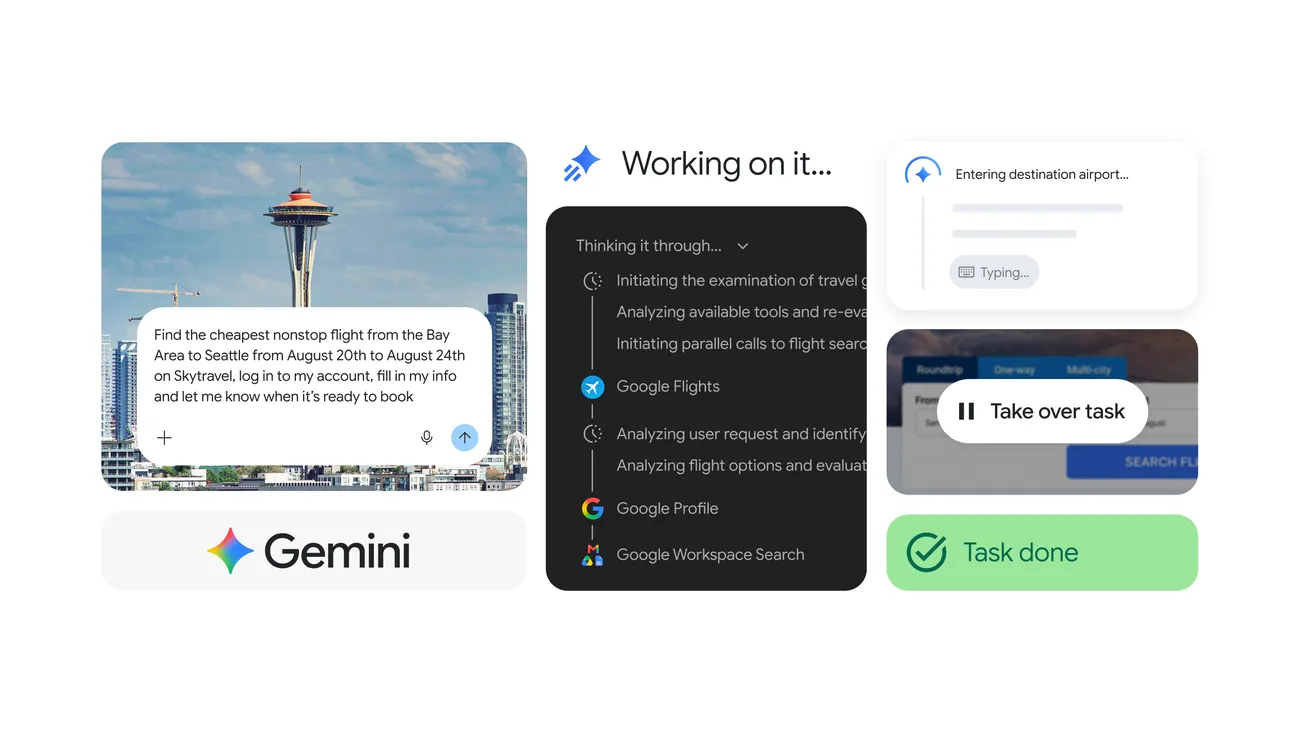
- What it does: The agent mode of the Gemini app, formerly Gemini Spark. It does things on websites "like shopping, booking travel, or making dinner reservations" and tracks prices, using "the local Chrome browser on your desktop" or "a separate remote browser in the cloud".
- Status: Live for people 18 or over on Google AI Pro or Ultra with a personal Google Account. Google lists it as not available in the European Economic Area, Nigeria, Switzerland or the UK.
- Run by: Google, in a cloud browser it runs or in the person's Chrome, for the person.
- How it pays: Not stated. Google's help page says not to enter "payment details" into the task thread, and Google's Spark post says payments are handed back to the person.
- What a website sees: Nothing Google publishes names Task. Task's cloud browser matches Google's description of Google-Agent, "used by agents hosted on Google infrastructure to navigate the web and perform actions upon user request", but Google names no product with it, so a Google-Agent visit cannot be counted as a Task visit. When Task drives the person's Chrome, nothing Google publishes applies.
- Usage the company publishes: None published.
- Sources: Gemini Apps Help on tasks, Google's Gemini Spark update, July 30, 2026, Google's user-triggered fetchers page
Gemini In Chrome, Perplexity's Comet, Claude In Chrome And Opera Neon Act Inside The Person's Browser
None of the four makers publishes a way to tell the agent's clicks from the person's, so blocking the agent means blocking the customer. The browsers themselves are covered in The Agentic Browser Landscape in 2026.
Gemini In Chrome Auto Browse (Google)
- What it does: Completes "multi-step tasks for you on the web": filling a cart within a budget, applying discount codes, filling in forms, booking event parking. It is "designed to pause and explicitly ask for your confirmation" before purchases or social posts.
- Status: Live in preview on personal accounts, 18 or over. In the US it works on desktop for Google AI Ultra, AI Pro and AI Plus subscribers, and on Android for AI Pro and AI Ultra. In India it works on desktop and Android "for AI Pro and AI Ultra subscribers". Google's help page still says US and desktop only.
- Run by: Google, inside the person's Chrome, for the person.
- How it pays: Not stated. The help page says Gemini may ask the person to take over for "Finalizing financial transactions".
- What a website sees: Nothing published. The help page says only: "When completing an auto browse task on a website, Gemini may share your information with that site."
- Usage the company publishes: None published.
- Sources: Chrome Help on auto browse, Google's auto browse announcement, January 28, 2026, Google's auto browse on Android post, August 18, 2026, Google India's auto browse post, October 7, 2026
Comet Assistant (Perplexity)
- What it does: The assistant in Perplexity's Comet browser. Perplexity says it can book a tee time, fill in sign-up forms, add to a cart, compare prices, take the person to checkout and find and apply discount codes. Before "completing a purchase from your shopping cart, it will pause and ask for permission".
- Status: Live. Comet is a free download on desktop, Android and iOS. Its Work mode hands a request to Perplexity's Computer and uses credits, which come with Pro and Max subscriptions. Perplexity states no countries.
- Run by: Perplexity, inside its Comet browser on the person's device, for the person. Work mode hands the request to Perplexity's Computer, and Perplexity does not say where that runs.
- How it pays: Not stated.
- What a website sees: Perplexity publishes nothing for Comet. Its bots page lists PerplexityBot and Perplexity-User, each with an IP file, and never mentions Comet.
- Usage the company publishes: "Millions of people use Comet every day on desktop and Android" (March 18, 2026), a count of the browser's users, not of assistant tasks.
- Sources: Perplexity's Comet worldwide launch, October 2, 2025, Perplexity's Comet for iOS post, March 18, 2026, Perplexity's Comet Assistant post, November 14, 2025, Perplexity Help on Comet for Android, Perplexity Help on credits, Perplexity's bots page
Perplexity does not say whether Work mode runs in the person's browser or on Perplexity's computers, so its docs do not tell a website where a Work mode visit comes from.
Claude In Chrome (Anthropic)
- What it does: A Chrome extension that reads, types, clicks links, moves between pages and fills out forms with the person's existing logins. Anthropic: "Purchases, financial actions, and anything you can't undo wait for you." It approves actions a classifier judges safe unless the person switches that off.
- Status: Generally available since August 26, 2026 on every paid Claude plan, not Free. It works in desktop Chrome only: it "doesn't run on other Chromium browsers or on mobile yet". Anthropic states no countries.
- Run by: Anthropic, as an extension in the person's Chrome, for the person.
- How it pays: Not stated.
- What a website sees: Anthropic publishes nothing for Claude in Chrome. Its Claude-Agent token covers browsers Anthropic hosts, and the extension runs in the person's Chrome.
- Usage the company publishes: None published.
- Sources: Anthropic's Claude in Chrome availability post, August 26, 2026, Anthropic's Claude in Chrome page, Claude Help Center on using Claude in Chrome safely
Anthropic's product page also mentions Claude's "own built-in browser" as a default for new users, without saying whether Anthropic hosts it and so whether it sends Claude-Agent.
Opera Neon (Opera)
- What it does: An AI browser whose Do agent "takes action on your behalf by opening pages, researching, filling in forms". It works inside the person's logged-in session.
- Status: Live since December 11, 2025 at $19.90 a month. Neon's autonomous browsing needs the paid Standard plan, and a Free plan lets outside agents drive Neon. Neon runs on Windows and macOS only, and Opera states no countries.
- Run by: Opera, inside its browser on the person's computer, for the person.
- How it pays: Not stated. Opera's FAQ says payment details "stay within your browser session and are never sent to Opera or any third-party servers", without saying whether Do completes purchases.
- What a website sees: Nothing published.
- Usage the company publishes: None published.
- Sources: Opera Neon FAQ, Opera's Neon public access release, December 11, 2025, Opera's free Neon for AI agents post, August 14, 2026
Instinct And Wajo's Fo Take Errands By Text Message And Phone
Neither company publishes how a business can recognize its agent, on a website or on the phone.
Instinct
- What it does: A personal assistant the person texts or calls. Instinct's homepage examples include ordering recipe ingredients, booking a train home and finding a tennis court. TechCrunch reported on October 24, 2026 that Instinct has "begun rolling out support for placing calls".
- Status: Live and invite only, per TechCrunch. Instinct's terms (revised August 26, 2026) say "The Services are operated by us in the United States" and require users to be 18 or over.
- Run by: Instinct, for the person. Terms: "You hereby appoint the Services as your agent to enter into agreements, commitments or transactions on your behalf."
- How it pays: Not stated as a mechanism. Terms: "you, not us, are making such purchase", and the service may share "your payment method in connection with any purchase."
- What a website sees: Nothing published. The terms say the service "may interact with third-party websites, applications and services on your behalf", with no user agent, IP list or call disclosure.
- Usage the company publishes: None published.
- Sources: Instinct's homepage, Instinct's terms, TechCrunch on agents in text messages, October 24, 2026
Instinct's founder, Noah Shinn, said on the Invest Like the Best podcast (September 28, 2026) that the invite-only platform is approaching a billion dollars in annual transactions, by TechCrunch's account, which adds "He didn't specify what the calculation behind this rate is". That is the value of purchases passing through, not revenue. TechCrunch also reports him saying the platform is growing 10% day by day, with no user count beside it (TechCrunch).
Fo (Wajo)
- What it does: Fo "calls, emails, and coordinates with people to get your everyday to-dos done", and human executive assistants step in when a task needs one.
- Status: Live, with free tiers and a Pro tier "Coming soon". Wajo's website gives no countries or launch date. TechCrunch reports Fo launched publicly in September 2026.
- Run by: Wajo, for the person.
- How it pays: Fo "checks out with a single-use card for each purchase", and Wajo says neither the merchant nor Fo sees the person's real card details.
- What a website sees: Nothing published. Wajo does not say whether Fo tells the person it calls that it is an AI.
- Usage the company publishes: None published on Wajo's website. Wajo told TechCrunch Fo had grown 10x since launch and is used in 107 countries, and TechCrunch says Wajo "didn't provide any numbers around users" (October 6, 2026).
- Sources: Wajo's homepage, TechCrunch on Fo, October 6, 2026, TechCrunch on agents in text messages, October 24, 2026
TechCrunch's reporter wrote that Fo called an airline about upgrades successfully, but when it called the reporter's partner to remind her to feed the cats, the call "didn't go smoothly, and disclosures were less clear".
Amazon, Walmart, DoorDash And Yelp Each Built An Agent That Shops Or Books Inside Their App
For a business that sells on Amazon, Walmart, DoorDash or Yelp, the agent is part of a marketplace it already depends on.
Alexa For Shopping And Buy For Me (Amazon)
- What it does: Alexa for Shopping, Amazon's shopping assistant, which "brings together Rufus and Alexa+", searches, compares, tracks prices, builds carts and buys, including "Auto Buying items at a set price" and reorders. Buy for Me lets the shopper "select products from other brands' sites" that Amazon does not sell, and Amazon buys them.
- Status: Live. Alexa for Shopping works in the US in the Amazon Shopping app and on Amazon's website, free to anyone signed in. Buy for Me is in beta "for a subset of U.S. customers", on Amazon's April 2025 page.
- Run by: Amazon, inside Amazon's store. Buy for Me shops on brands' websites, and the brand is the seller.
- How it pays: Alexa for Shopping buys on the Amazon account. Buy for Me uses the account's "primary address and credit card", and Amazon completes checkout on the brand's website, "securely providing the customer's encrypted name, address, and payment details".
- What a website sees: Nothing published. Amazon does not say how a brand's website can recognize a Buy for Me order. Amazon says "merchants can opt out at any time", by opting out of Shop Direct, the program behind Buy for Me. Amazon says merchants manage their participation in the Shop Direct Merchant Workspace. Merchants handle "Shipping, delivery, returns, exchanges, and customer service" themselves.
- Usage the company publishes: Alexa for Shopping "was used by 400 million+ customers in the last 12 months, with customer interactions up 570% year-over-year" (Q3 2026 earnings release, October 29, 2026). Buy for Me has "tens of millions of products available to purchase", with no order or user figure.
- Sources: Amazon Q3 2026 earnings release, October 29, 2026, Amazon on Alexa for Shopping, May 13, 2026, Amazon's Buy for Me announcement, April 3, 2025, Amazon on the Shop Direct Merchant Workspace, November 4, 2026, Amazon on Shop Direct and external stores, March 11, 2026
The 400 million counts Alexa for Shopping as a whole, and the earnings release does not mention Buy for Me.
Sparky (Walmart)
- What it does: Builds carts in Walmart's app: it turns lists and photos into a cart, adds recipe ingredients "right to your cart", suggests gifts and checks local stock. No Walmart page says Sparky checks out by itself.
- Status: Live, "Available across Walmart customers in the U.S.", and "scaling to Canada and Mexico and Sam's Club members in the U.S."
- Run by: Walmart, inside its app.
- How it pays: Not stated.
- What a website sees: Not applicable, because Sparky acts inside Walmart. Nothing published.
- Usage the company publishes: "The number of customers using Sparky is up 70% from last year, and the customers and members who use Sparky for shopping spend 40% more per order than others who don't" (CEO John Furner, Q2 FY27 earnings call, August 20, 2026).
- Sources: Walmart newsroom, October 30, 2026, Walmart Q2 FY27 earnings call transcript, August 20, 2026
Furner's 40% compares Sparky users with everyone else, which does not show that Sparky made anyone spend more.
Ask DoorDash
- What it does: DoorDash calls it "a new way to search the app in your own words". It builds a grocery cart from a photo or a recipe link, suggests restaurants and builds a delivery cart, and the person checks out "in a few taps".
- Status: Live since June 11, 2026, "available now in select areas on iOS for restaurant search and grocery shopping", with reservations "coming soon".
- Run by: DoorDash, inside its app.
- How it pays: It does not pay. The person reviews the cart and checks out.
- What a website sees: Not applicable, because Ask DoorDash acts inside DoorDash. Nothing published.
- Usage the company publishes: "Over 30% of recent grocery orders through Ask DoorDash were routine restocks" (mid-August to mid-September 2026). DoorDash's release on ordering by text says people found "more than 40,000 new restaurants" with Ask DoorDash in its first three months. DoorDash gives no user or order count.
- Sources: DoorDash's Ask DoorDash announcement, DoorDash's Dash Forward 2026 release, DoorDash's ordering by text release, September 30, 2026, DoorDash's Q3 2026 results
DoorDash's Q3 2026 letter says the assistant helps people "find new restaurants most similar to what your usual orders are". For a restaurant on DoorDash, that means getting suggested depends on looking like what a customer already orders.
Yelp Assistant Booking (Yelp)
- What it does: Books tables, joins waitlists, orders food and books appointments inside Yelp through partners: Yelp Guest Manager and OpenTable for tables, DoorDash and Grubhub for food, Vagaro, Zocdoc, RepairPal and Calendly for appointments.
- Status: Live. Yelp Assistant is on iOS and Android. OpenTable booking works "across the U.S." on iOS only, and Vagaro and Zocdoc also started on iOS only.
- Run by: Yelp, inside its app, with bookings completed by partners.
- How it pays: Not stated. Orders and bookings complete on the partner platforms, and "Booking confirmation and reservation changes are handled directly on OpenTable".
- What a website sees: Not applicable, because Yelp Assistant works through partner integrations. Nothing published.
- Usage the company publishes: Yelp Assistant generated "approximately 10% of Request-a-Quote projects in the quarter", Yelp's form for asking service businesses for a price (Q3 2026 shareholder letter, November 5, 2026). Yelp gives no booking figure.
- Sources: Yelp's Yelp Assistant launch release, Yelp's fall 2026 product release, Yelp Q3 2026 shareholder letter, November 5, 2026
A restaurant is bookable through Yelp Assistant only if it takes bookings through one of the systems Yelp plugs into, and its website plays no part.
Google AI Mode, Microsoft Copilot Checkout And Perplexity Instant Buy Put The Checkout Inside Search Or An Assistant
The store stays the seller in all three. Copilot Checkout and Perplexity Instant Buy orders reach the merchant through its checkout provider or a commerce integration, with no visit to the store's website. The guide to agentic commerce explains those integrations.
Google AI Mode, Ask Maps And Universal Cart (Google)
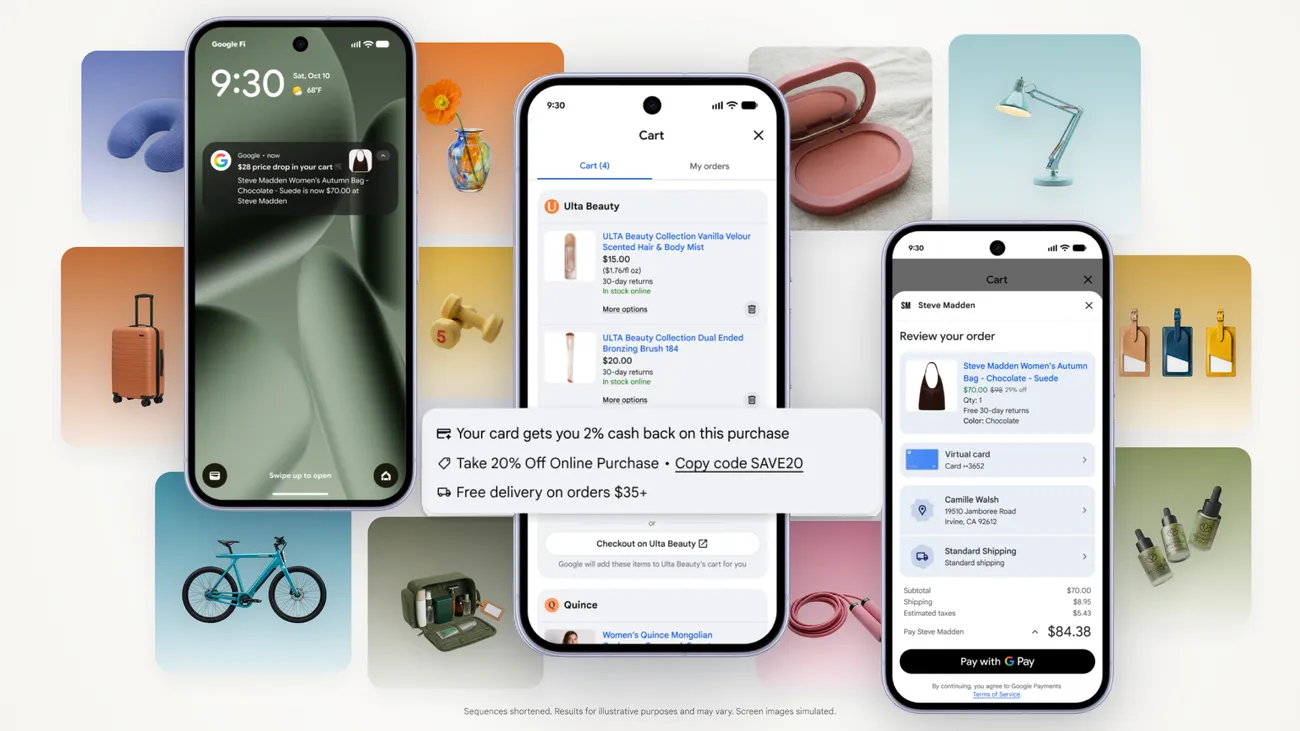
- What it does: AI Mode in Google Search books restaurants and, for "home repair, beauty or pet care", can call businesses for the person. Ask Maps books restaurant reservations in Google Maps. Universal Cart keeps one cart across retailers, tracks price and stock, and lets the person check out with Google Pay or "transfer your items directly to the merchant's cart".
- Status: Live. Universal Cart is "rolling out in the U.S. across Google Search and in the Gemini app" (October 15, 2026). AI Mode restaurant booking works in the US, the UK, India, Canada and Australia. Ask Maps is rolling out in the US and India. Google's automated business calls cover the US except Indiana, Louisiana, Minnesota, Montana and Nebraska. Checkout through the Universal Commerce Protocol, Google's standard for an agent checking out with a store, covers the US, Canada and Australia.
- Run by: Google, inside Search, Maps and the Gemini app. The merchant "will remain the seller of record".
- How it pays: Google Pay, with the cart "built on Google Wallet".
- What a website sees: Google publishes nothing tied to these products. Businesses can stop Google's automated calls in their Business Profile settings or by saying "Please stop calling my business".
- Usage the company publishes: "AI Mode has surpassed one billion monthly users" (May 19, 2026), a count of AI Mode as a whole. Google gives no figure for Universal Cart, booking or calls.
- Sources: Google's Universal Cart launch, October 15, 2026, Google's I/O 2026 Search post, May 19, 2026, Merchant Center Help on UCP checkout, Business Profile Help on automated calls, Google's summer travel tips, April 17, 2026, Google's Ask Maps announcement, March 12, 2026
Google describes its checkout both ways: Merchant Center help says the agentic checkout "buys things on the customer's behalf directly on a merchant's website", and Google also says the protocol checkout happens "directly on Google's surfaces". Google is the only maker on this page that publishes an opt-out for a calling agent.
Copilot Checkout (Microsoft)
- What it does: Lets the person buy inside Microsoft Copilot.
- Status: Live in the US on Copilot.com and in Copilot's mobile apps. "Only English-language merchants who sell to US buyers are eligible at this time (supporting USD)".
- Run by: Microsoft, inside Copilot. "Copilot does not become merchant of record".
- How it pays: Through the merchant's checkout provider. Microsoft's agentic commerce page lists Shopify and Stripe, and its January 8, 2026 announcement also named PayPal. Microsoft does not say which payment method the person uses.
- What a website sees: Nothing published. Orders arrive through the merchant's checkout provider, not as a website visit. Microsoft says Shopify merchants "have been automatically enrolled (with controls in Shopify admin)", Stripe's Agentic Commerce Suite sells on Copilot for Stripe merchants, and Microsoft Merchant Center takes a product feed in the Universal Commerce Protocol.
- Usage the company publishes: None for Copilot Checkout. Microsoft gives the size of Copilot's shopping catalog, "over 500,000 merchants", and no order count.
- Sources: Microsoft's retail announcement, January 8, 2026, Microsoft Advertising blog, April 21, 2026, Microsoft Advertising's agentic commerce page
Perplexity Instant Buy
- What it does: "Instant Buy lets U.S. users search for and buy products from a wide range of merchants directly on Perplexity".
- Status: Live since November 25, 2025, "currently available to all users in the United States" except Enterprise Pro and Enterprise Max. Perplexity's pages carry no 2026 update.
- Run by: Perplexity, inside Perplexity. "retailers stay at the center of the transaction as the merchant of record".
- How it pays: The person's details, saved once, with checkout powered by PayPal. "Your order and payment are securely sent directly to the merchant."
- What a website sees: Nothing published. Only merchants "compatible with our agentic checkout experience" are supported, so orders arrive through an integration.
- Usage the company publishes: None published.
- Sources: Perplexity Help on Instant Buy, Perplexity's shopping launch, November 25, 2025, PayPal's Instant Buy release, November 25, 2025
Airbnb, Yelp, Anthropic, DoorDash And Amazon Have Announced Five Agents That Are Not Open To Everyone Yet
Airbnb's travel agent and Yelp Check for Me are announced for later, Airbnb's for the first half of 2027 and Yelp's for "the coming months". Claude Duet, DoorDash ordering by text and Alexa ordering by text are open only by waitlist or invite.
Airbnb's Travel Agent (Airbnb)
- What it does: "We're building our own AI agent to help guests plan and book trips."
- Status: Announced in Airbnb's Q3 2026 shareholder letter (earnings webcast November 5, 2026). Promised date: "We plan to start rolling it out to guests in the first half of 2027." Airbnb names no countries.
- Run by: Airbnb, inside Airbnb.
- How it pays: Airbnb's payments: "Because Airbnb handles reservations, payments, and customer support, our agent will be able to help guests..."
- What a website sees: Not applicable, because the agent will act inside Airbnb. Nothing published.
- Usage the company publishes: None, because it has not launched.
- Sources: Airbnb Q3 2026 shareholder letter
The same letter argues against the general agents above: "We don't believe people will use one AI agent for everything" and "People don't want to delegate the choice of where to stay."
Check For Me (Yelp)
- What it does: "an AI phone agent calls the restaurant on your behalf and updates you within minutes" on the wait for a table.
- Status: Announced October 20, 2026. Promised date: "rolling out in the coming months on eligible restaurant business pages", and in Yelp Assistant "when walk-ins are possible in the U.S. on iOS".
- Run by: Yelp, by phone, for the person.
- How it pays: It does not pay.
- What a website sees: Not applicable, because the restaurant receives a phone call. Yelp does not say whether the call identifies itself as an AI or as Yelp, and describes no opt-out for restaurants.
- Usage the company publishes: None, because it has not launched.
- Sources: Yelp's fall 2026 product release, Yelp's Check for Me press release
Claude Duet (Anthropic)
- What it does: A proactive agent that works through the person's email, calendar and connected apps, browses in "its own browser in the cloud" and pays for purchases the person approves. Anthropic says personal errands such as "booking tickets" "aren't quite as strong", and that it "doesn't make phone calls or send text messages to other people".
- Status: Announced October 21, 2026. "A research preview is available by waitlist today, starting with US Pro, Max, and Ultra subscribers", on iOS, Android and claude.ai. Anthropic gives no date for wider access.
- Run by: Anthropic, in a browser it hosts, for the person.
- How it pays: One-time cards, through Stripe's Link or through Shop Pay, Shopify's checkout, where the card is "scoped to the approved amount". Anthropic: "some sites can block Claude Duet from paying".
- What a website sees: A normal browser user agent with a Claude-Agent token added, and nine IPv4 addresses published at
claude.com/.well-known/sail. Anthropic says to "match on theClaude-Agenttoken rather than the full string". robots.txt and signed requests are not mentioned. - Usage the company publishes: None published.
- Sources: Anthropic's Claude Duet announcement, October 21, 2026, Claude Help Center on getting started with Claude Duet, Claude Help Center on how Anthropic-hosted browsers identify themselves, Claude Help Center on Shop Pay with Claude Duet, Anthropic's IP file
Anthropic says the token is used by "some Claude products, including Claude Duet", so a Claude-Agent visit is not proof of Duet, and it says to check the IP address because anyone can send the token.
DoorDash Ordering By Text
- What it does: The person texts what they want, and "it searches local spots, suggests a cart, and handles checkout right inside the text thread".
- Status: Announced September 30, 2026, as a beta by waitlist: "U.S. consumers on iOS can join the waitlist to try the experience in beta now". DoorDash gives no date for general availability.
- Run by: DoorDash, by text, inside DoorDash.
- How it pays: Not stated: "Confirm your order right inside the text thread and it manages checkout."
- What a website sees: Not applicable, because it orders inside DoorDash. Nothing published.
- Usage the company publishes: None published.
- Sources: DoorDash's ordering by text release, September 30, 2026, DoorDash's Dash Forward 2026 release
DoorDash's October 29, 2026 shareholder letter talks about ordering by text as already out, while both releases describe a waitlisted beta, and this entry follows the releases.
Alexa Ordering By Text (Amazon)
- What it does: Alexa for Shopping by text message. It "can seamlessly complete the purchase on your behalf" and reorders "with your approval".
- Status: Announced November 6, 2026. Invite only, for a "subset of customers" in the US, with "millions more customers in the coming weeks".
- Run by: Amazon, by text, inside Amazon's store.
- How it pays: Not stated on Amazon's page.
- What a website sees: Not applicable, because it orders inside Amazon. Nothing published.
- Usage the company publishes: None for texting. Amazon's page says "the number of customers using Alexa for Shopping's agentic features has grown more than eight times since the start of the year."
- Sources: Amazon's Alexa for Shopping by text announcement, November 6, 2026
Only Anthropic Publishes A Website Signal Tied To A Named Personal Agent, The Waitlisted Claude Duet
Anthropic's support article gives the Claude-Agent token and points to nine IPv4 addresses at claude.com/.well-known/sail, a file in a draft format the article says is not yet a standard. Anthropic's file marks these as the only addresses Claude-Agent uses.
| Maker | What it publishes for websites | Tied to a named personal agent |
|---|---|---|
| Anthropic | Claude-Agent token, nine IPv4 addresses at claude.com/.well-known/sail | Yes, "some Claude products, including Claude Duet" |
Google-Agent token, an IP file (user-triggered-agents.json), and Google is testing request signing for it | No product named | |
| Meta | Meta-ExternalFetcher on its crawler page | No, Muse is not mentioned |
| OpenAI | Four bots, none of them dots | No |
| Perplexity | PerplexityBot and Perplexity-User | No, Comet is not mentioned |
| Amazon | A merchant opt-out from Shop Direct, the program behind Buy for Me, managed in the Shop Direct Merchant Workspace | No |
| xAI, Opera, Instinct, Wajo, Walmart, DoorDash, Yelp, Microsoft, Airbnb | Nothing | No |
Google's page says these fetchers "generally ignore robots.txt rules", and describes Google-Agent as "used by agents hosted on Google infrastructure" without naming Gemini Task, AI Mode or any other product. The full user agent strings and IP details for Claude-Agent and Google-Agent are in the AI user agents reference.
Server Logs And Cloudflare Can Show The Few Personal Agents A Website Can Name
A website's server log keeps a record of every visit, so whoever runs your website can search it for the two published names, Claude-Agent and Google-Agent. Anyone can fake a name, so the check that counts is whether the visit came from the company's computers: Anthropic and Google both publish the list of addresses their agents use.
Finding nothing does not mean no agent came. Muse "will appear as your activity", the agents in the person's browser look like the person, dots can switch to the person's computer, and Grok Bot can send its traffic through the person's connection. Copilot Checkout and Perplexity Instant Buy arrive as orders, with no visit to find.
If your website runs on Cloudflare, its Security Analytics show a Personal Assistants category, and since November 4, 2026 its AI Crawler and Agent access policies let you set each of what Cloudflare calls "supported personal agents" to Allow, Block on pages with ads, or Block. Cloudflare's announcement does not list which agents those are (Cloudflare).
Allowing Or Blocking Personal AI Agents Costs A Business Something Different For Each Kind
Allowing is already the default for every agent a website cannot name, which covers all seventeen live ones. Blocking the one agent that can be named, Claude Duet, stops a product most people cannot get yet, while Muse, dots and the in-browser agents carry on looking like the person. Cloudflare's third option, blocking only on pages with ads, fits a business whose pages earn from ads shown to people.
| Kind | Can a website tell it apart | What a block stops | What a business can do |
|---|---|---|---|
| Cloud computer (Muse, dots, Grok Bot, Gemini Task) | No published signal for any of the four | dots can move to the person's computer and Grok Bot can move its traffic to the person's connection, so a block can move them without stopping the errand | Ask your hosting provider to block traffic from cloud providers' networks in general, or, on Cloudflare, set a supported agent to allow or block in the AI Crawler and Agent access policies, whose announcement does not list the agents supported |
| Person's browser (auto browse, Comet, Claude in Chrome, Neon) | No | The person's visit, since the agent is the person's browser | Nothing that reaches the agent without reaching the customer |
| Text or phone (Instinct, Fo) | No | Nothing a website controls | Nothing published for Instinct or Fo |
| Store's agent (Alexa for Shopping and Buy for Me, Sparky, Ask DoorDash, Yelp Assistant) | Not applicable, except Buy for Me orders | For Buy for Me, the orders Amazon sends | Opt out of Shop Direct, the program behind Buy for Me, managed in the Shop Direct Merchant Workspace |
| Checkout in search or an assistant (Google, Copilot Checkout, Perplexity Instant Buy) | Orders arrive through an integration | The sales through that channel | On Shopify, use the Copilot Checkout controls in Shopify admin, stop Google's automated calls in Business Profile settings, and ask the payment provider whether the store is in Perplexity Instant Buy |
| Claude Duet (announced) | Yes, by token and IP list | Duet's errands on the website | Write a rule on the Claude-Agent token and check each address against Anthropic's IP file |
Personal AI Agents From Meta, OpenAI, Amazon And Google Reach A Business As Its Customer, With No Name A Website Can Check
The biggest usage figures any maker publishes, Google's one billion monthly AI Mode users, Amazon's 400 million Alexa for Shopping customers and Meta's 10 million Muse setups, belong to companies that had the users before they had the agent. Instinct and Fo, built only to be agents, publish no usage figure. You need a business before you can pour AI onto it.
A customer sent by an agent arrives looking like the person, from Muse, dots or a browser, or as an Amazon order, a Copilot Checkout order or a Google Pay checkout. Either way, an agent did the reading and the comparing, and the company that runs it helps decide what the customer buys.