
225: Every Website Already Has An Agent Experience And Most Are Bad With Netlify CEO Matt Biilmann
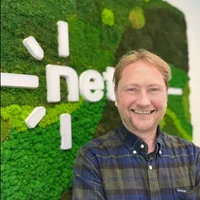
Mathias Biilmann
Netlify
Co-founder and CEO of Netlify, coined the term Jamstack in 2015 and Agent Experience (AX) in 2025.
The user-agent string has been in HTTP headers since the 1990s. For thirty years, the "user" behind that agent was human. Matt Biilmann, CEO and co-founder of Netlify, saw the shift coming before most. He wrote the foundational essay on Agent Experience in January 2025, then surprised his entire company by pivoting around it at their kickoff that same month.
Netlify.ai shipped three weeks ago as a separate entry point built specifically for agents. Not a toggle on the existing website. A different URL entirely. The logic: netlify.com still needs to help humans understand what Netlify is. But agents don't need marketing copy or sign-up buttons. They need a blessed path. Content negotiation tells agents to go to one URL while humans see the other. That's not subtle, that's architectural.
Biilmann's framework breaks agent experience into four pillars: Access, Context, Tools, and Orchestration. Access asks whether agents can reach your product at all. Context is prompt engineering for agents. Tools are the concrete capabilities you expose. Orchestration covers how agents string those tools together. Every product already has an agent experience, he argues. The question is whether yours is good or terrible.
The SaaS implications are stark. Netlify is ripping out vendor contracts internally. Sales reps call to right-size deals and customers respond by asking if they can build it with an agent instead. Then they cancel. The build-versus-buy floor is dropping fast, and traditional seat-based SaaS margins are in real trouble.
KEY TAKEAWAYS
- Every product already has an agent experience, whether designed or not. Agents interact through computer use, fetching, or workarounds. The only variable is quality.
- Build separate entry points for agents rather than forcing one URL to serve both humans and machines. Content negotiation can direct each audience to their optimal path.
- Test your agent experience baseline by opening your website in Claude Code or ChatGPT and asking the agent to complete a real task. Where it stalls reveals your AX gaps.
- Check traffic logs for AI assistant visitors now. ChatGPT-User, Claude-Web, PerplexityBot, and GPTBot are visiting whether you measure them or not.
- SaaS vendors should expect customers to question every renewal. The response to right-sizing calls is increasingly 'let me see if I can build it with an agent' followed by cancellation.
SHOW NOTES
The User-Agent Header Was Always Forward-Looking
HTTP headers have included user-agent strings since the 1990s. The name itself implies software navigating on someone's behalf. For three decades that someone was human. Cloudflare now reports AI assistants account for 5.5% of all internet traffic, up from 3.9% just six months ago. That growth rate exceeds mobile adoption fifteen years ago. The architectural question every website faces is not whether agents will arrive but whether the website works when they do.
Four Pillars Define Agent Experience
Matt Biilmann developed his AX framework through a year of building Netlify's agent integrations. Access determines whether agents can reach a product at all. Context functions as prompt engineering for agents, shaping how they perceive and understand a product's capabilities. Tools are the concrete interfaces exposed for agent interaction. Orchestration governs how agents combine those tools into workflows.
The framework emerged from practical necessity. When Biilmann discussed Netlify's next-generation function interface with a distinguished engineer in late 2024, the question kept surfacing: how do coding agents work with this? The phrase "agent experience" crystallized in that conversation. Within weeks it became the company's strategic pivot.
Why Netlify Built a Separate Website for Agents
Netlify.ai launched as a distinct entry point rather than an agent mode on the existing website. The reasoning is straightforward: netlify.com exists to help humans understand Netlify. Marketing copy, pricing pages, sign-up flows. Agents don't need any of that. They need a blessed path with compact instructions.
Content negotiation connects the two. When agents hit netlify.com, instructions will direct them to netlify.ai for getting started. Humans still see the regular website. But what happens when a human asks their agent to describe Netlify's homepage? The agent needs to return marketing claims, not deployment instructions. Changing the meaning of a URL too dramatically creates confusion. Separate entry points solve the problem cleanly.
SaaS Economics Are Breaking
The build-versus-buy calculation that sustained ninety-percent-margin seat-based SaaS is shifting structurally. Netlify is experiencing this internally. Sales representatives call customers to right-size contracts. The customer response increasingly follows a pattern: "let me see if I can build it with an agent." Then they call back to cancel.
Developer tool companies have upside because companies need more tools to build more software. Everyone else faces pressure. When the cost of building drops dramatically, the threshold for buying from vendors rises proportionally.
Data Structures May Matter Less Than Context
Software engineering operated for fifty years on what Biilmann calls the Linus Torvalds principle: data structures matter more than code. Get the data structures right and the code follows. LLMs don't work this way. They're not organized around data structures at all.
Building software around LLMs requires rethinking foundational assumptions. Context, flows, and creative approaches may matter more than both data structures and code. That's a fundamental shift in how software gets built.
Test Your Website Against An Agent
Open your website in Claude Code or ChatGPT. Give the agent a real task. Watch where it stalls. That failure point is your agent experience baseline. Check server logs for AI assistant user agents: ChatGPT-User, Claude-Web, PerplexityBot, GPTBot. The traffic exists whether measured or not. Biilmann's January 2025 essay on Agent Experience at biilmann.blog provides the conceptual foundation. The one-year retrospective adds the four pillars framework.
WATCH ON YOUTUBE
QUESTIONS ANSWERED
What is Agent Experience (AX) in web development?
Agent Experience describes how AI agents interact with a product or website, whether through computer use, fetching content, or working around barriers. Matt Biilmann's framework breaks AX into four pillars: Access (can agents reach the product), Context (how agents understand it), Tools (capabilities exposed to agents), and Orchestration (how agents combine tools). Every website already has an agent experience, the question is whether that experience is good or bad.
Why did Netlify build a separate website for AI agents?
Netlify launched netlify.ai as a distinct entry point because agents and humans have different needs. Netlify.com exists to help humans understand the product through marketing copy and sign-up flows. Agents need a compact, blessed path with deployment instructions. Content negotiation directs agents to netlify.ai while humans continue seeing netlify.com, avoiding the confusion of trying to serve both audiences from one URL.
How much internet traffic comes from AI assistants?
Cloudflare reports AI assistant traffic now accounts for 5.5% of all internet traffic, up from 3.9% six months earlier. This growth rate exceeds how quickly mobile traffic grew fifteen years ago. Website owners can check their server logs for AI assistant user agents including ChatGPT-User, Claude-Web, PerplexityBot, and GPTBot to measure their own AI traffic.
What are the four pillars of Agent Experience?
Matt Biilmann's Agent Experience framework consists of four pillars: Access determines whether agents can reach a product at all. Context is prompt engineering for agents, shaping how they understand capabilities. Tools are the concrete interfaces exposed for agent interaction. Orchestration covers how agents string tools together within a product to complete workflows.
How is AI affecting SaaS business models?
AI is shifting build-versus-buy economics by lowering the cost of building software internally toward the cost of buying it. Traditional ninety-percent-margin seat-based SaaS faces structural pressure as customers increasingly respond to contract renewals by testing whether they can build equivalent functionality with AI agents. Netlify reports customers calling back to cancel after initially requesting to right-size contracts, choosing to build internally instead.
How can I test my website's agent experience?
Open your website in Claude Code or ChatGPT and ask the agent to complete a real task you expect users to perform. Watch where the agent stalls or fails. Those failure points reveal your agent experience baseline. Additionally, check server traffic logs for AI assistant user agents like ChatGPT-User, Claude-Web, PerplexityBot, and GPTBot to understand how much agent traffic you're already receiving.
RELATED ARTICLES
Eleven Ways Websites Can Get Paid For AI Use, And Who Sets The Price In Each
In 2025 Cloudflare let websites set the price AI crawlers pay. In 2026 it launched a scheme where the AI company sets the price and reports its own usage. Across eleven schemes that pay websites for AI use, the ones where the website names the price have no AI company named as paying, and where AI companies pay, they set the price or count the usage.
Shopify Now Enrols Your Store In Every New AI Shopping Channel
Shopify signs eligible stores up for every new AI shopping channel by default. Leave it on, and read the shopper count in your Shopify admin as clicks from AI apps, not agent purchases.
Amazon Blocked Meta's Muse, And robots.txt Had Nothing To Say
Amazon cut Meta's Muse off from its store on 20 September with a Conditions of Use notice. Its own robots.txt blanket-refuses 99 named agents, and Muse is not one of them, because Meta's crawler documentation lists no user agent string for it.
ENJOYING THIS EPISODE?
Practical strategies for making your website work for AI agents and the humans using AI to find you. Once a week you get the new articles, the latest podcast episode, and a few links worth keeping.